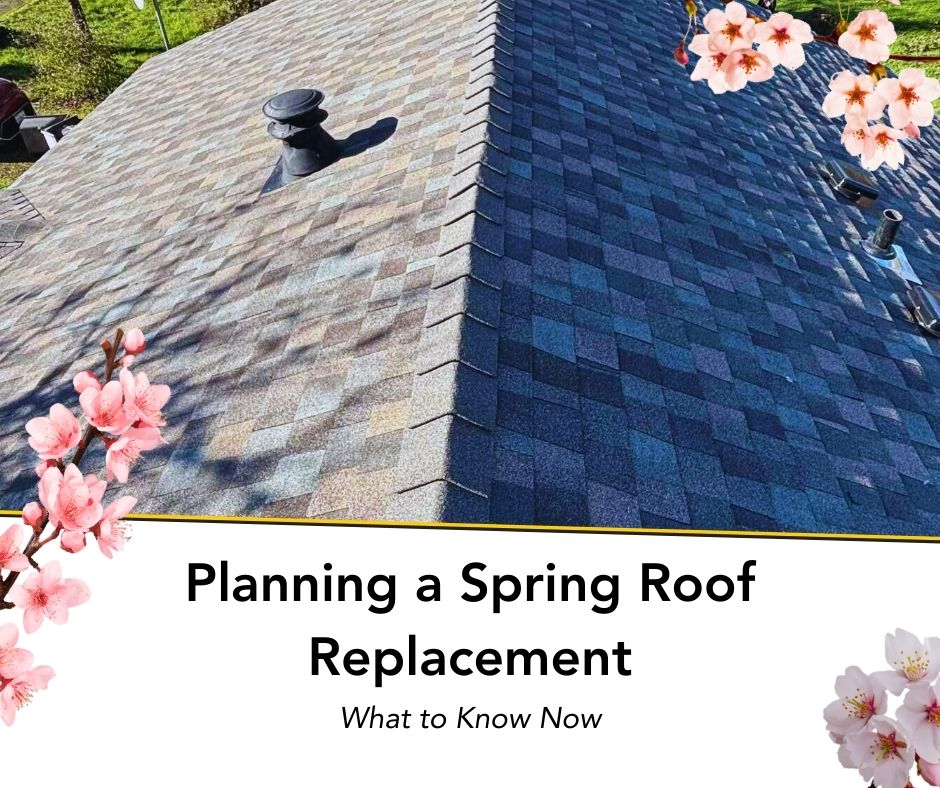
Planning a Spring Roof Replacement
March and April still brings plenty of rain to the Willamette Valley (and sometimes snow!), but there are also precious windows of dry weather that make spring the ideal time…

In Oregon, winter brings a mix of rain, wind, cold temperatures, and occasional snow. While our Pacific Northwest climate isn’t known for the deep snow of the Rockies, freezing temperatures and snow accumulation can still impact roofing systems significantly. Understanding how snow and freezing temps affect roofing materials helps homeowners and businesses protect their most important investment — the roof over their heads.
During winter, moisture from rain and snow can penetrate into tiny gaps in roofing materials. When temperatures drop, that moisture freezes and expands, a process known as the freeze-thaw cycle. Over these repeated cycles, expansion widens cracks and stresses roofing components, ultimately leading to larger failures if left unaddressed. Be sure to assess your roof after bad storms – they may have created a weak point that the next storm could exploit.
Additionally, snow accumulation adds weight to your roof. While most Oregon homes are built to handle typical winter loads, heavy snow or ice buildup in roof valleys or on low-slope areas can still exert extra pressure on decking and supports. Ice dams — ridges of ice that form at roof edges when melting snow refreezes — can block drainage and force water under shingles, resulting in leaks and interior water damage.
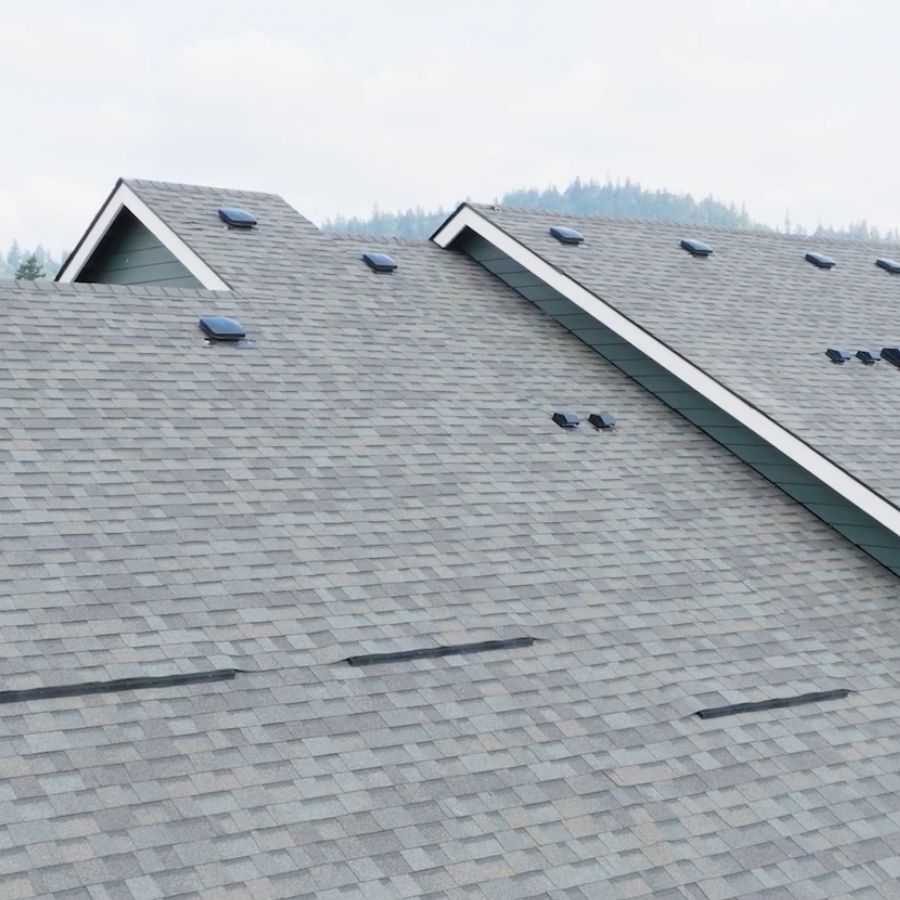
Asphalt shingles are the most common residential roofing material. In cold weather, they tend to become brittle (not ideal) and less flexible. This brittleness increases the risk of cracking, curling, and granule loss, especially when snow melts and refreezes or when roof technicians walk on cold shingles (if they’re brittle, they are more prone to breaking). Over time, repeated temperature swings accelerate aging and shorten shingle lifespan of your roof.
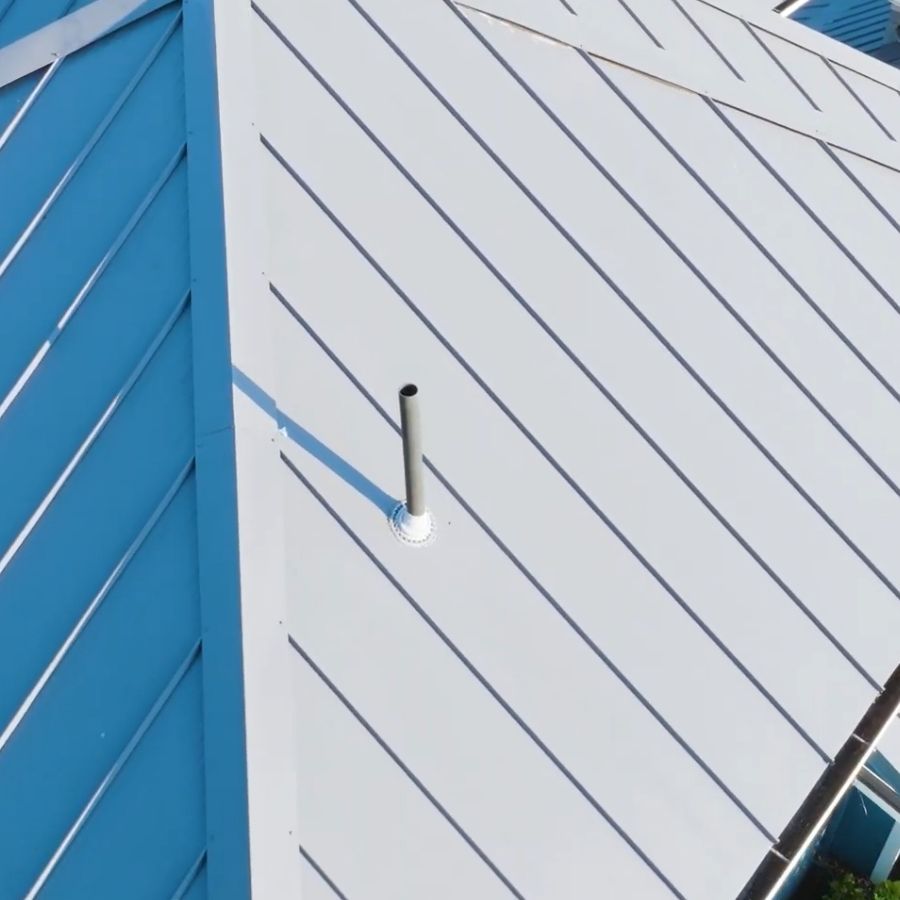
Metal roofing performs exceptionally well in snowy and freezing conditions. Because metal doesn’t absorb moisture, it resists the internal freeze-thaw expansion that can damage porous materials like asphalt. Snow also sheds more easily from smooth metal panels, reducing snow/ice buildup and minimizing ice dam formation on your roof – yay! That said, properly sealed seams and secure fasteners are essential to prevent leaks and maintain the long-term performance of your metal roof.
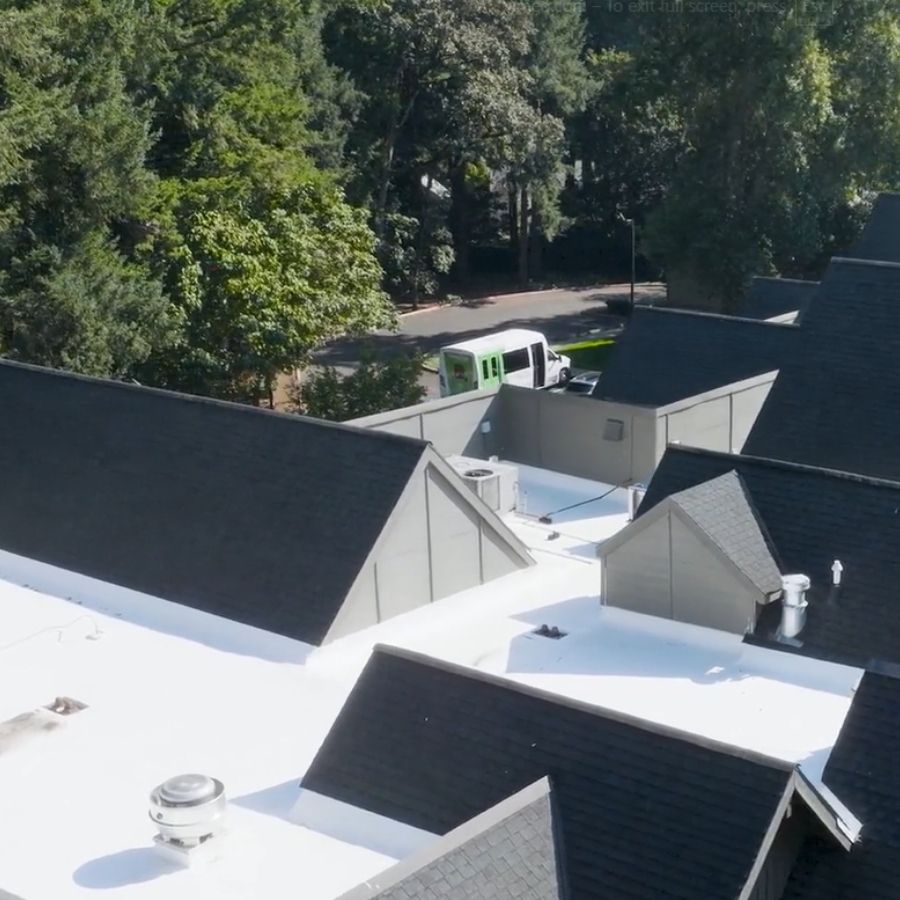
Flat roofs are vulnerable because snow and ice melt slowly, allowing water to sit and refreeze in place. Ponding water and inadequate drainage can accelerate deterioration of roof membranes and connected materials if not properly maintained.
Understanding how snow and freezing temperatures interact with roofing materials empowers Oregon homeowners and businesses to make smarter maintenance decisions and avoid costly winter roof damage.


Roofing contractor based in Salem, Oregon, serving the Willamette Valley and Oregon's Central Coast Region.
OR CCB: 209048
WA CCB: DAKOTCS843J1
Contact
Office Hours: 9 AM to 5 PM
Monday - Friday
Our Office:
1191 Capitol St NE, Salem, OR 97301